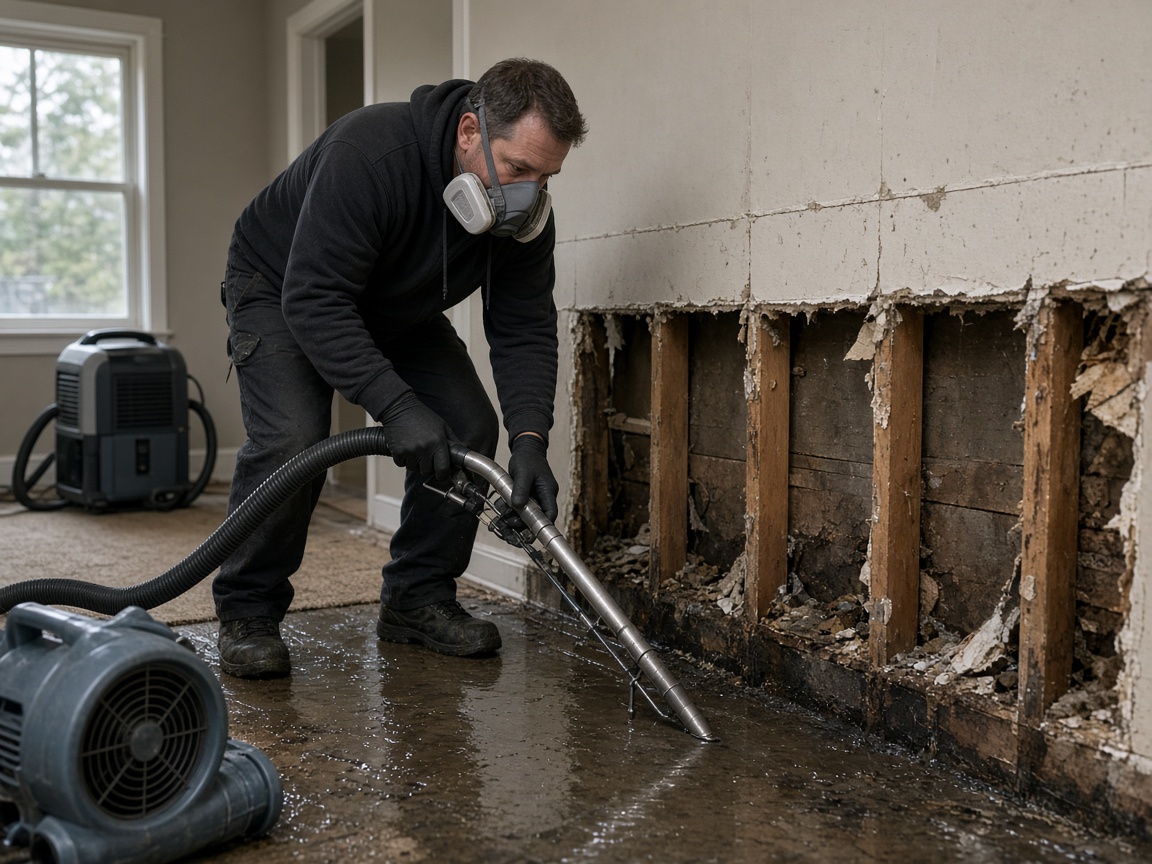
Lincoln homes built before 1960 in Haymarket, University Place and Near South often feature plaster walls and balloon framing that trap moisture deep behind finishes. Thunderstorms roll through Lancaster County each spring and summer, sending water under slab foundations or into crawl spaces common in Belmont and South Bottoms. Crews must pull baseboards and use moisture meters on brick and lathe before mold sets in during the humid weeks that follow.
Cold winters bring pipe bursts in uninsulated lines running through attics and exterior walls of West A and Havelock bungalows. Once temperatures swing back above freezing, hidden leaks surface days later. Restoration teams cut out saturated insulation, dry floor joists with directed heat, and check for hidden rot before reinstalling drywall so the structure meets current Lancaster County building code requirements for vapor barriers.
Tornado warnings and straight-line winds frequently damage roofs in the University of Nebraska-Lincoln area, allowing rain to enter through compromised flashing around Memorial Stadium and Sunken Gardens neighborhoods. Restoration includes tarping, interior water removal from multiple stories, and coordination with insurance adjusters familiar with Lancaster County storm claims.
Proximity to Omaha means some Lincoln homeowners compare pricing with larger firms that travel from Douglas County. Local crews based at 5711 Russell Dr stay within city limits and respond same-day to calls during business hours, avoiding the markup and delay that comes with crews driving in from the metro.
Technician insight
In Lincoln the thing that catches most people out with Water Damage Restoration Service is how quickly cold winter air lets hidden moisture linger inside balloon-framed walls in University Place and Haymarket homes; if you do not pull the plaster or open the cavities before the next cold snap, you end up chasing mold that only shows up after the furnace kicks on.
Belmont Basement After June Thunderstorm
Heavy rain overwhelmed a sump pump in a 1960s Belmont ranch. Water reached the finished family room and soaked carpet pad plus the bottom two feet of drywall. Crews extracted the water the same afternoon, removed saturated materials, and ran drying equipment for four days until joists and subfloor tested dry. Homeowners returned to a clean, code-compliant space without hidden mold.
Water Damage Restoration Service Services We Offer
✓Basement Water Extraction
Removes standing water from finished and unfinished basements common in South Bottoms and Belmont after heavy rains or sump pump failure.
✓Pipe Burst Restoration
Locates and dries out wall cavities and floors damaged by frozen or aged supply lines in older Haymarket and University Place homes.
✓Storm Damage Drying
Deploys air movers and dehumidifiers after thunderstorms or wind-driven rain enters through roofs in West A and Havelock.
✓Carpet and Pad Removal
Cuts and disposes of saturated carpet and padding while treating subfloors to prevent mold growth in high-traffic areas.
✓Crawl Space Moisture Control
Extracts water and installs temporary drying systems in vented crawl spaces typical under 1950s–1970s Lincoln housing stock.
✓Post-Flood Structural Drying
Monitors moisture levels in framing and drywall after major events so homes in Downtown and Near South can be restored safely.
Water Damage Restoration Service Cost in Lincoln, NE
| Service | Typical Range | What Affects It |
|---|---|---|
| Emergency Water Extraction | $350–$900 | Higher when multiple stories or finished basements are involved. |
| Full Structural Drying | $800–$2,200 | Depends on square footage and length of equipment runtime. |
| Pipe Burst Wall Cavity Dry-Out | $450–$1,100 | Increases with plaster walls common in pre-1960 homes. |
| Storm-Related Roof Leak Restoration | $600–$1,800 | Varies by number of rooms and extent of ceiling damage. |
Ranges are typical for Lincoln, NE and confirmed with an exact written quote before any work starts.
How it works
- 1
On-Site Assessment
Technician arrives during posted hours, documents affected rooms, and uses meters to map moisture in walls and floors.
- 2
Water Removal
Pumps and extraction equipment pull standing water from basements and slabs before hidden pockets cause further damage.
- 3
Drying And Dehumidification
Equipment runs continuously while crews monitor readings until materials reach acceptable moisture content for the local climate.
- 4
Restoration And Repairs
Replace removed drywall, flooring, and insulation then coordinate final cleaning so the home is ready for occupancy.
Pricing
Pricing varies by water volume, number of affected rooms, and whether hidden cavities in older Lincoln homes require additional demolition.