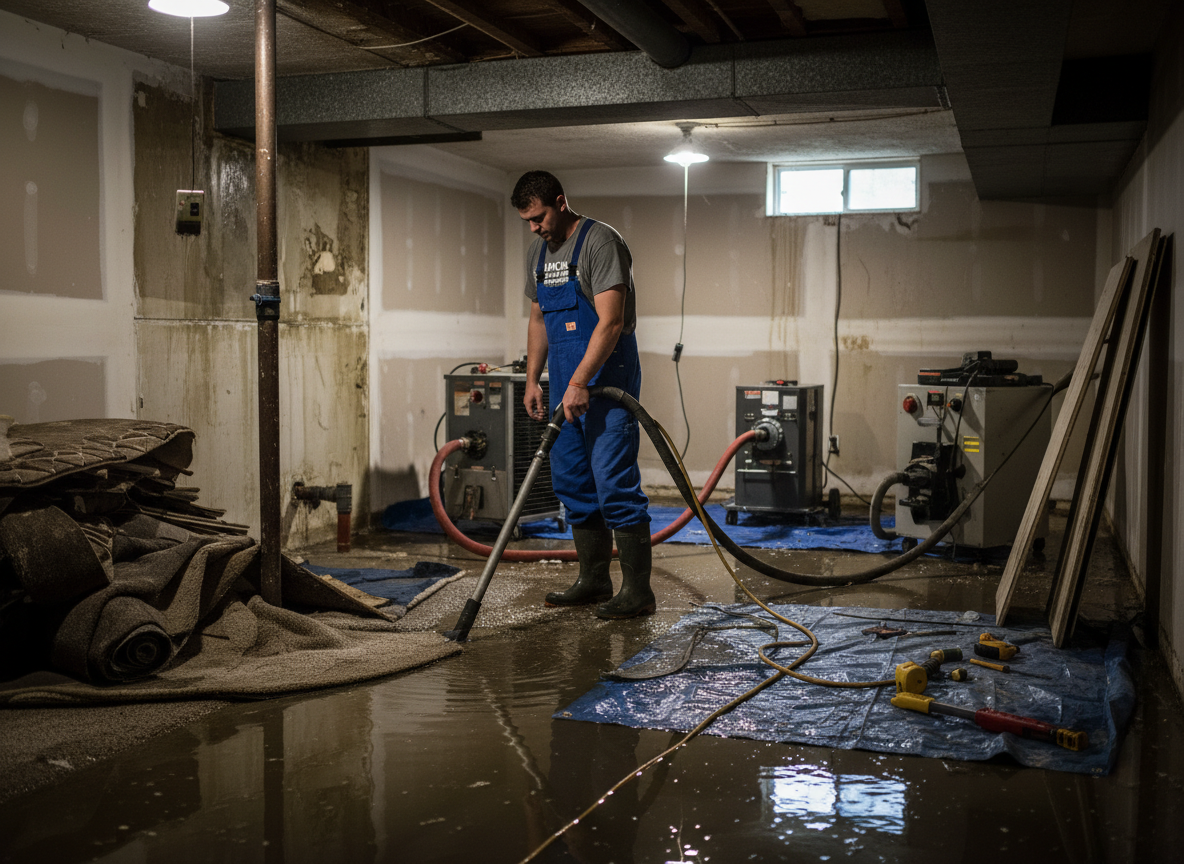
Lincoln homes in neighborhoods like Haymarket and University Place often date to the early 1900s with plaster walls and balloon framing that trap moisture after roof leaks or pipe bursts during cold winters. Thunderstorms common in Lancaster County can overwhelm older downspouts in South Bottoms and Belmont, sending water into basements where clay soils slow drainage. Technicians must pull baseboards early to check for hidden saturation behind lath and plaster, because standard moisture meters miss pockets that later support mold growth once summer heat returns.
After extraction, drying plans change based on whether the property sits near the University of Nebraska-Lincoln campus or in West A, where slab-on-grade construction limits airflow underneath. Crews set up dehumidifiers sized for the square footage and monitor daily readings because hot, humid summers here can push indoor moisture back into already-dried materials. In cases involving Memorial Stadium event crowds or heavy rain near the Nebraska State Capitol, crews also watch for secondary damage to electrical systems in finished lower levels.
Homeowners in Near South and Havelock frequently call after washing machine or water heater failures that soak subfloors. Repair work includes removing affected particleboard underlayment and treating joists with antimicrobial solutions before new plywood goes down. Because tornado season overlaps with peak thunderstorm months, crews keep portable generators ready so drying equipment stays running when power drops in outlying Lancaster County sections.
Technician insight
In Lincoln the thing that catches most people out with Water Damage Repair is how clay soils in South Bottoms and Belmont keep water against foundations long after the storm passes, especially in homes built before modern waterproofing.
Frozen Pipe Leak in Near South
A homeowner in Near South discovered water seeping from a kitchen wall after a January freeze. Assessment showed saturation in plaster and under the original hardwood. Crews extracted water, dried the cavity with targeted equipment, removed damaged plaster, treated the studs, and reinstalled new drywall and trim.
Water Damage Repair Services We Offer
✓Emergency Water Extraction
Removes standing water from basements and crawl spaces in South Bottoms and Belmont before it reaches framing or electrical systems.
✓Structural Drying for Older Homes
Uses targeted airflow and dehumidification on plaster and balloon-frame walls common in Haymarket and University Place properties.
✓Pipe Burst Restoration
Addresses sudden leaks from frozen lines during Lincoln winters, including subfloor and insulation replacement in West A and Near South homes.
✓Storm Damage Drying
Handles rainwater intrusion after thunderstorms or high winds near the Nebraska State Capitol and Memorial Stadium areas.
✓Appliance Leak Repair
Extracts and dries water from washing machine or water heater failures before it spreads under cabinets in Havelock and Downtown residences.
Water Damage Repair Cost in Lincoln, NE
| Service | Typical Range | What Affects It |
|---|---|---|
| Water Extraction | $400–$900 | Higher when multiple rooms or finished basements are involved |
| Full Structural Drying | $600–$1,400 | Depends on home age and access in older Haymarket or University Place properties |
| Subfloor Replacement | $800–$2,200 | Varies with square footage and whether joists need treatment |
Ranges are typical for Lincoln, NE and confirmed with an exact written quote before any work starts.
How it works
- 1
On-Site Assessment
Technicians inspect affected rooms, check moisture levels in walls and floors, and note any hidden damage behind cabinets or under flooring.
- 2
Water Removal
Portable pumps and vacuums extract standing water from basements and low areas typical in South Bottoms and Lancaster County properties.
- 3
Drying And Monitoring
Air movers and dehumidifiers run until daily readings confirm materials are dry, with adjustments for summer humidity or winter cold.
- 4
Restoration Work
Replace damaged drywall, subfloor, or insulation and treat surfaces to prevent mold before final cleanup.
Pricing
Pricing varies by water volume, affected square footage, and whether hidden damage exists behind older plaster or under slabs.